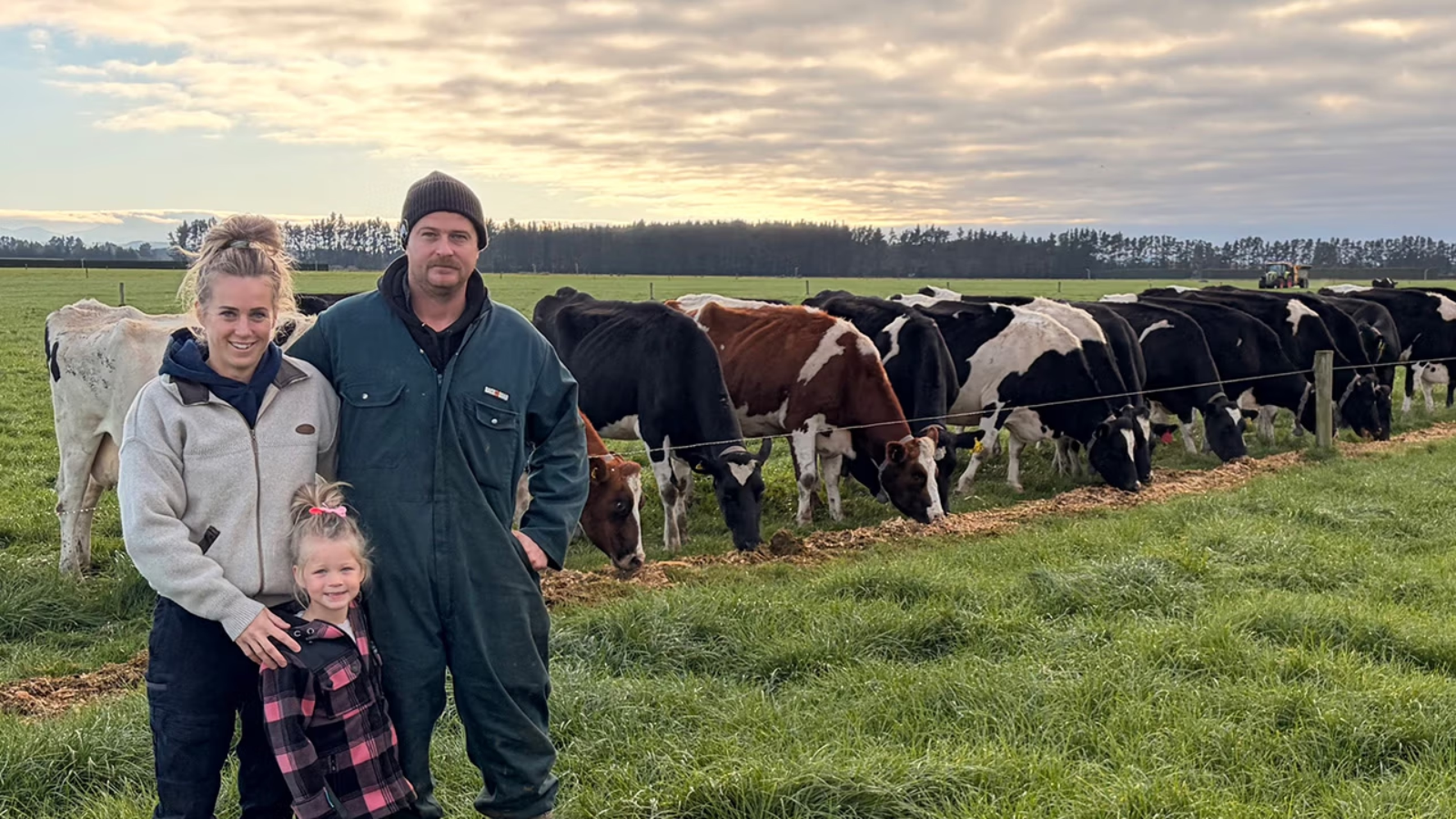
Canterbury’s Wobben family is combining Afimilk technology and strong Holstein Friesian genetics to push their operation toward a one million milksolids milestone.
For Canterbury dairy farmers Sian Meijer and Rick Wobben, wearable technology has become one of their most valuable on-farm tools – helping manage 1,850 cows across an expansive, high-performing dairy operation while improving efficiency, mating outcomes and day-to-day decision making.
Together with Rick’s parents, Roel and Diana Wobben, they operate a large-scale dairy business at West Eyreton, near Rangiora, where technology and genetics work hand-in-hand to support productivity and profitability.
The operation, originally converted from a deer farm in 2000, milks through two sheds across two adjoining farms, but is managed as one unit.
The introduction of Afimilk AfiCollars two seasons ago has added another layer of precision to an already highly organised system.
“We’re always looking for ways to improve,” Sian says. “The collars have become another tool that helps us take the farm to the next level.”
Rick and Sian are currently contract milkers for Roel and Diana, in their fifth season on the property.
The scale of the farming operation means management is complex. The “big shed” peak milks up to 1,200 cows through an 80-bail rotary fitted with GEA ACR cup removers, Protrack and Afimilk technology. Meanwhile, the “little shed” has the same technology in a 60-bail rotary and feed pad system and is home to the younger and lighter cows.
“That’s where the 450-500 heifers calve in spring and where we top up with lighter cows to approximately 600 to 650 total, season-dependent,” Sian says.
The farm split-calves, with around 1,550 cows calving in spring and 250-300 cows calving in autumn. Autumn-calving cows are milked through winter, while carryover empties and sound culls boost milk production until August 1, when all cows leave the little shed and move over to the big shed.
Five full timers are employed at the big shed, and three full timers at the little shed. Additionally, three-four full-time, fixed term staff are brought on board during the busy periods of the season.
The predominantly Holstein Friesian farm produced 986,000kgMS last season, and they are closing in on a milestone they’ve had in their sights from the beginning.
“We’ve hit record after record and we’re on track to produce 1,000,000kgMS this season,” Sian says. “When we started here, Rick told Roel he wanted to hit one million milksolids. Roel kind of chuckled and said, “Go ahead.” Now, we’re almost there.”
Despite the large herd size, the family remains focused on breeding functional, efficient Holstein Friesian cows suited to their farming system.
“The perfect cow for us is a Holstein Friesian that’s not too big, but still does the milk,” Sian says. “We want a cow with a big engine room, good udders and strong fertility. Herd genetics is one of our passions.”
The herd is approximately 95 percent straight Holstein Friesian and increasingly, red genetics are becoming a feature of the herd as well.
“We love a red factor,” Sian says. “If they tick all the boxes, we’d pick red over black and white every time. About 20 percent of the herd has a red factor now.”
When walking through the herds, they check records to see what Holstein Friesian sires they have used that they are particularly impressed with, the type and functionality the family values showing in their offspring.
Feeding is another key component of the operation’s success. The System 5 farm incorporates a broad range of supplementary feed including DDG, lucerne silage, maize silage, whole crop and grass silage fed via feed out wagons, and DDG and barley through the shed. Diet is altered to suit what each farm needs throughout the season.
While nutrition and genetics have always been priorities, the introduction of Afimilk AfiCollars has refined how Sian and Rick approach herd management and mating.
“We spoke to a few different companies, but what sold us on Afimilk was the people,” Sian says. “They were excellent to deal with.”
The first Afimilk collars were introduced for autumn mating in May 2024. After only one month of using the technology, the family headed overseas to the Netherlands, leaving staff to manage the new system.
“It was a bit of a baptism by fire for the team, but they handled it really well,” Sian says.
By spring mating 2024, the collars had been fully integrated into the mating programme.
At the little shed, spring mating starts October 25 and is AI-only to Holstein Friesian genetics for six weeks, before introducing Charolais straws.
At the big shed, spring mating also starts October 25, with cows AI’d to Holstein Friesian genetics for the first three weeks. Then, the later calvers and non-cyclers are separated out into the bull mob for three weeks. Post six weeks, the whole herd is tailed with bulls until December 27.
Finally, they finish mating with AI short gestation up to January 7-10.
“We do target mate certain cows to Charolais from the beginning of mating, if they have multiple traits we don’t like,” Sian says. “And, the Angus bulls we use are bred from Roel and Diana’s Angus stud herd.”
Using Afimilk technology has been a game changer for the farm. It works alongside Protrack and MINDA to provide heat alerts and cow activity data directly through the system.
One of the biggest challenges, Sian says, was learning to trust the technology.
“You have to trust the collars and not second guess them,” she says. “That’s actually harder than it sounds when you’re used to things like tail paint and more tangible evidence of heat.”
While the collars did not necessarily reduce empty rates, they noticeably improved submission time.
“We saw cows getting in calf earlier, which was really positive,” Sian says. “We didn’t change our mating routine, either. We still AI once a day at the same time every day.”
So far, Sian believes they have only scratched the surface of the technology’s capabilities.
“At the moment we’ve probably only used about 50 percent of the available data,” she says. “Once we feel like we’ve fully maximised the use of the mating data, we’ll start looking deeper into the rest of data monitoring, such as eating, rumination, and health patterns.”
Because, Sian is quick to point out, the technology is only as good as the people using it.
“There’s no point getting collars if you don’t have someone passionate about running the system,” she says. “You need someone who can digest the data and actually act on it. Otherwise, it’s just a waste of time.”
As Rick and Sian prepare to transition into a 50/50 sharemilking role for Roel and Diana next season, collars will also be installed on their new farm – reflecting just how valuable the technology has become within their business.
But despite the technology, infrastructure and production milestones, Sian is quick to acknowledge the people behind the operation.
“Credit must go to Roel and Diana and how they have shaped this farm over the years,” she says. “Pesters Rd is a huge farm, and it takes a whole team to run this place. It definitely wouldn’t tick along as well it does without the people on the ground every day.
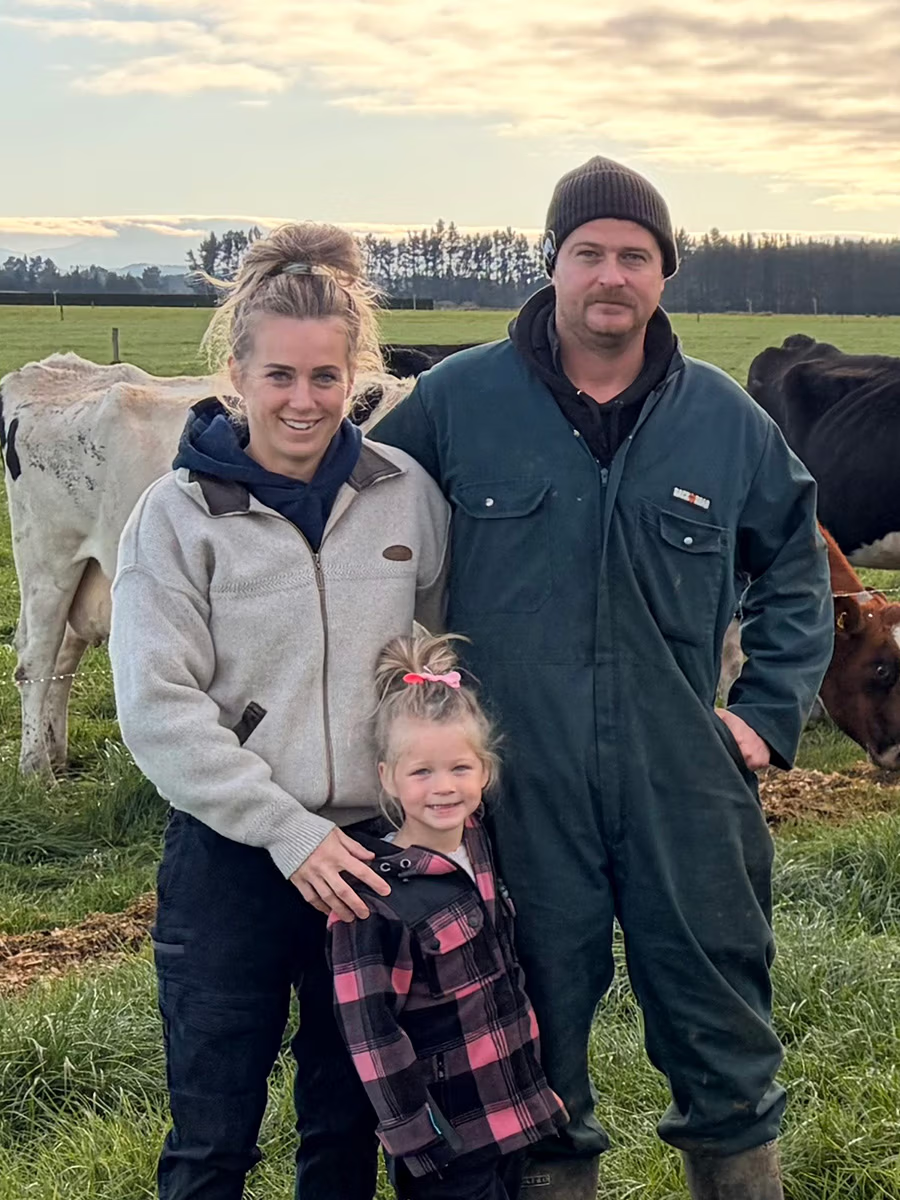
“Sharemilking is a step up in our career, but hopefully also a step back in workload. With a five-year-old, it’s about creating a bit more balance and enjoying the little things, too.”
| Owner | Roel & Diana Wobben trading as Netherland Holdings Ltd |
| Contract Milkers | Sian Meijer & Rick Wobben |
| Location | West Eyreton, Canterbury |
| Farm size | 500ha milking platform with 300ha support, in one block |
| Cows | 1,850 (95% Holstein Friesian) |
| Production | 540kgMS/cow |
| Stud name | Caridi |
Add a Comment
You must be logged in to post a comment